

The 1/3 rule in lawn mowing advises cutting no more than one-third of the grass blade's height per session to ensure health and resilience. This prevents plant stress, enhances photosynthesis, and promotes energy production. Longer blades provide soil shade, aiding moisture retention and root health. The rule fosters a denser lawn, reducing weed growth and increasing resistance to pests and diseases. If you skip a week of mowing and your grass in North Carolina grows longer, continue following the 1/3 rule. Gradually reduce height over sessions to maintain optimal lawn health, ensuring the grass remains vibrant and resilient.
What is the 1/3 rule in lawn mowing?
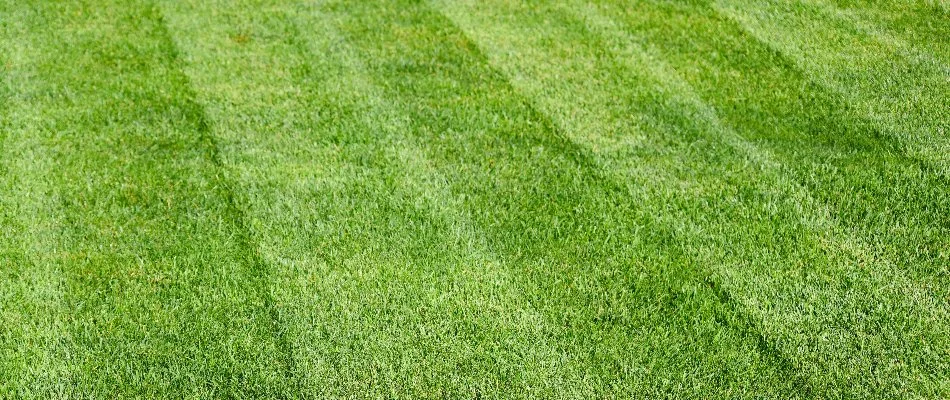
The 1/3 rule is a fundamental guideline for lawn mowing. It involves cutting no more than one-third of the grass blade's height during a single mowing session. This practice ensures that the grass remains healthy and resilient. When you follow the 1/3 rule, you prevent the grass from becoming stressed and weak. This is because cutting too much of the grass blade at once can shock the plant, so removing only a small amount per session is ideal to avoid this.
How does the 1/3 mowing rule help your grass grow as healthy as possible?
Cutting grass too short, also known as scalping, can put tremendous stress on your lawn. This stress weakens the grass, making it more susceptible to pests, diseases, and harsh weather conditions. By following the 1/3 mowing rule, you maintain a healthy balance.
Leaving sufficient leaf surface enables the grass to photosynthesize efficiently. This process is crucial because photosynthesis is how it produces the energy needed for growth. When you cut too much of the blade, the grass struggles to recover and regrow, depleting its energy reserves. Additionally, longer blades provide shade for the soil, keeping it cool and reducing evaporation. This leads to better moisture retention and healthier root systems.
Furthermore, adhering to the 1/3 rule contributes to a denser lawn by encouraging strong root development. Dense lawns inhibit weed growth since there’s less room for intruders to establish themselves. Ultimately, this practice promotes a vibrant, resilient lawn capable of withstanding environmental stresses.
What should you do if you skip a week of mowing and your grass is longer than normal?
There may be times when you skip a week of mowing, resulting in longer grass than usual. In such cases, it's essential to continue following the 1/3 rule. Even if the grass is longer than normal, you should still cut only one-third of the blade's height. While your grass may be a bit longer after this mowing session due to the extra growth, it's crucial to prioritize the health of your lawn.
By continuing to follow the 1/3 rule, you'll gradually bring your grass back to its ideal height. It may take a few mowing sessions, but your lawn will eventually return to its optimal condition. This approach ensures that your grass remains healthy and resilient, even if you miss a week of mowing.
Give us a call today to sign up for our lawn mowing service!
The 1/3 mowing rule is a simple yet powerful practice that can greatly benefit your lawn’s health and appearance. Leave it to our team to handle your lawn mowing needs! Here at Agape Lawn Company, we offer a lawn mowing service to keep your lawn healthy and beautiful throughout the growing season. We take pride in our attention to detail and commitment to excellence, ensuring that your lawn receives the care it deserves. This service not only focuses on keeping your grass manicured but also healthy, which is why we follow the 1/3 rule to promote healthy growth.
Don't let improper mowing practices compromise the health of your lawn. This service is offered to residential properties in Cary, Chapel Hill, Raleigh, NC, and surrounding areas. Call us today at (919) 672-2509 to sign up for this service and experience the difference that expert care can make for your lawn.